
NEWS & EVENTS
Delegation from Nanyang Technological University, Singapore Visits Renmin University's School of International Studies
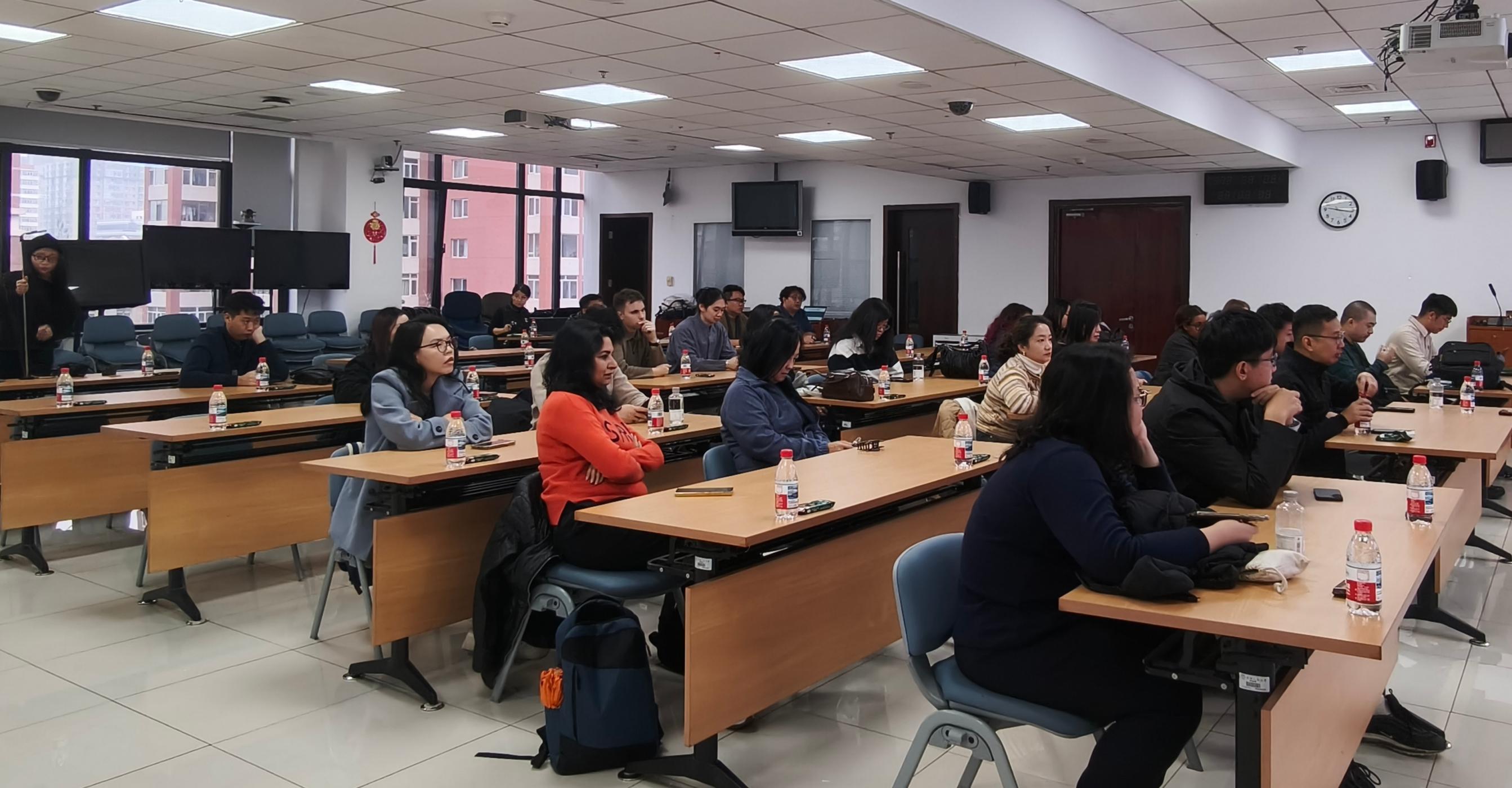
On the morning of November 7, 2025, a delegation from the S. Rajaratnam School of International Studies (RSIS) at Nanyang Technological University, Singapore visited Renmin University's School of International Studies. The delegation was led by Associate Professor Li Mingjiang, Deputy Dean of RSIS, and over 30 faculty and students from diverse backgrounds including China, Singapore, Austria, France, Malaysia, India, Pakistan, and the United Kingdom. Li Chen, Deputy Dean and Associate Professor of the School of International Studies, welcomed the delegation and introduced the School's developments in teaching, research, and international collaboration. He also delivered a special lecture on China-U.S. relations and the global order. The session, chaired by Deputy Dean Li Mingjiang, featured active discussions and exchanges following the presentation.
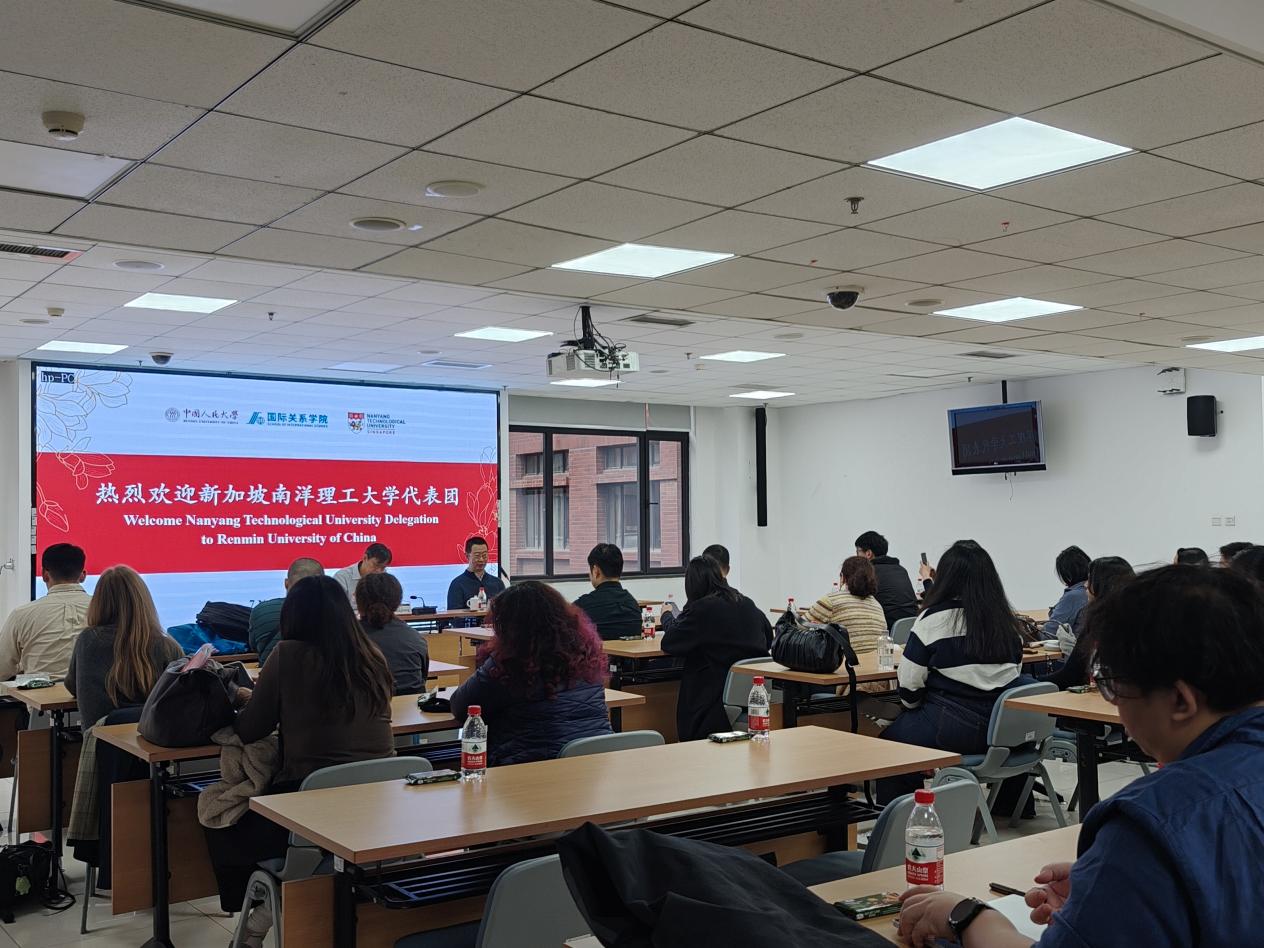
Associate Professor Li Chen began by deconstructing popular historical analogies, stating that equating China-U.S. competition directly with the "pre-WWI Anglo-German rivalry" or a "new Cold War" fundamentally misreads both history and reality. He analyzed in depth that WWI's outbreak resulted from multiple complex contradictions and cannot be attributed solely to naval arms races. Moreover, comparing China—deeply integrated into the global economic system—to the Soviet Union during the Cold War ignores their fundamental differences. "Present-day America is neither pre-WWI Britain nor the post-WWII United States. The current international order is far more complex than the early modern multipolar system or the bipolar Cold War structure dominated by major powers," Associate Professor Li emphasized. "Especially in the interest-intertwined and sensitive Western Pacific region, clinging to the Cold War mentality of 'drawing lines for confrontation' can easily lead to miscalculation and conflict—a risk that demands serious vigilance."
When explaining the core logic of China-U.S. interactions, Associate Professor Li Chen proposed that understanding the behavior of both nations requires examining not only the global dimension—assessing the sustainability of major power strategies from an internal-external dynamics perspective—but also the regional dimension. Major powers' legitimate security concerns within their respective regions objectively exist.Compared with certain major powers that pursue absolute security and dominance through coercive means in their regions, China stands as a global power that places high importance on balancing the protection of its legitimate rights and interests with promoting regional stability and development. He pointed out that the key to interstate relations lies in "expectations management"—establishing foreign policies based on reasonable expectations of each other's interests and behaviors, resolving differences through communication and consultation, and avoiding miscalculations arising from wishful thinking or difficulties and risks created by strategic dependency. Professor Li also noted that rational expectations regarding major powers' interests and conduct have been fundamental to the success of Singapore's foreign policy.
Regarding the current issue of China-U.S. technological competition, Associate Professor Li Chen called for moving beyond the narrow perspective of "zero-sum game." He argued that merely pursuing technological superiority does not absolutely guarantee national security, as evidenced by the offsetting effect of tactical innovation on technological gaps demonstrated in the Russia-Ukraine conflict. For emerging technologies like artificial intelligence, Associate Professor Li emphasized that their governance involves multiple dimensions including social, ethical, and security aspects, requiring global coordination and cooperation rather than simple "technological blockade" or "bloc rivalry." He particularly stressed that establishing transparent international rules and trust mechanisms is more conducive to managing the risks associated with technological development than fragmented technological competition.
Following the lecture, Associate Professor Li Chen engaged in an in-depth exchange with faculty and students from Nanyang Technological University on topics including the fundamental nature of China-U.S. competition, the role of Global South countries, and China's strategic composure within the complex international environment. During the interaction, Associate Professor Li emphasized that China consistently maintains control over its own development trajectory, focusing more on enhancing the scientific rigor and sustainability of its strategic planning and decision-making rather than falling into the trap of "systemic competition" with other nations. He stated that safeguarding core interests amidst a volatile global landscape, adhering to peaceful development, and fulfilling responsibilities as a major country represent China's enduring strategic choice.
The visit concluded successfully with substantial academic exchanges. Both institutions expressed their anticipation for broader student exchanges and deeper academic collaboration in the future.
RECOMMENDATION
Ministry of Foreign Affairs, the People’s Republic of China Ministry of National Defense, the People’s Republic of China
Ministry of Education, the People’s Republic of China Ministry of Commerce, the People’s Republic of China
China International Development Cooperation Agency Renmin University of China
CONTACT US
Tel: +86 10 62511350
Email: rucsis@ruc.edu.cn
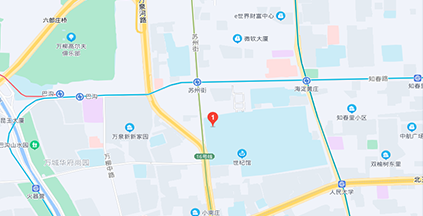
Address: Mingde International Building,No.59, Zhongguancun Street, Haidian District, Beijing P.R.China
Post Code: 100872
Copyright2017-2023.School of lnternational Studies, RUC 中国人民大学国际关系学院版权所有. 京公网安备110402430004号 | 京ICP备05066828号-1